Storytelling
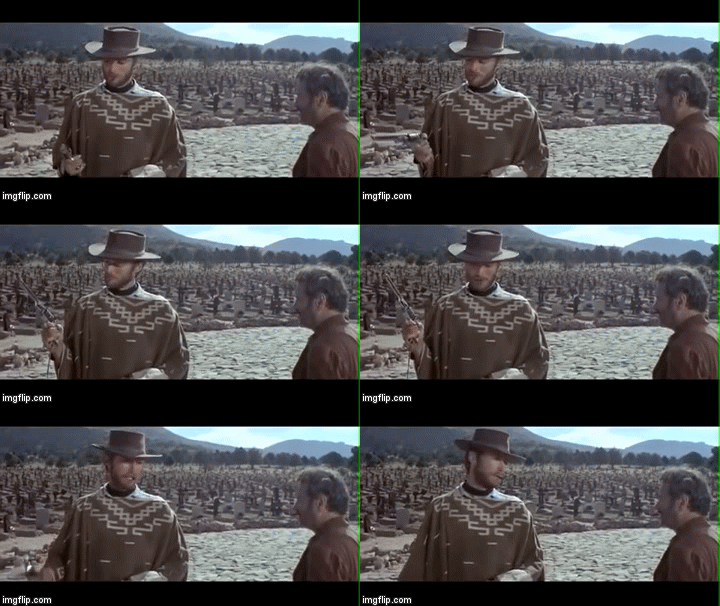
Storytelling is the idea that through editing a sequence of information can be unraveled to the audience in a certain style.One way in which a story can be told is through the technique of providing and withholding information within the scene. At (7:53) here we can see a 2 shot between Clint Eastwood and Eli Wallach, where Eastwood takes the gun and fires it knowing that it was never loaded. This example of withholding information to the audience allows for the development of drama to unfold, the very fact that the gun was never loaded meant that he was a sitting duck in the stand off, thus leaving the audience in awe of Clint Eastwoods character because he had a plan all along. As the drama unfolds the audience feel as if they have all the information with a building anxiety whilst watching, but the withhold of information allows for a greater appreciation here on after.
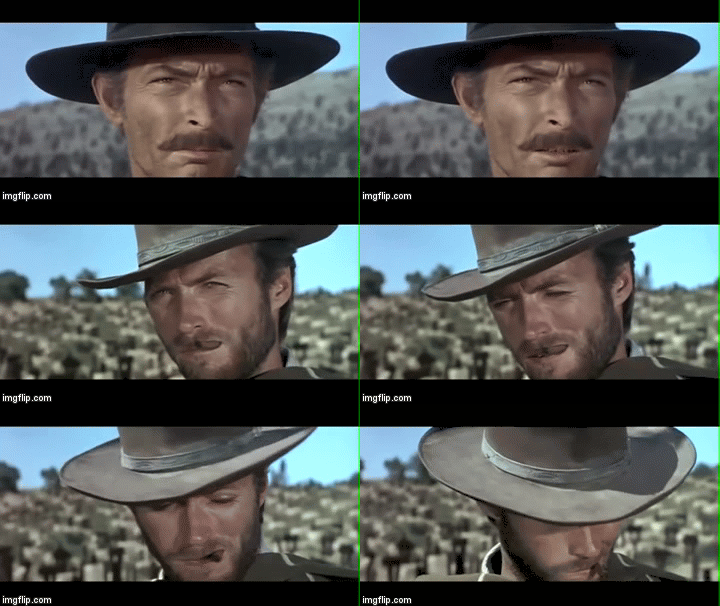
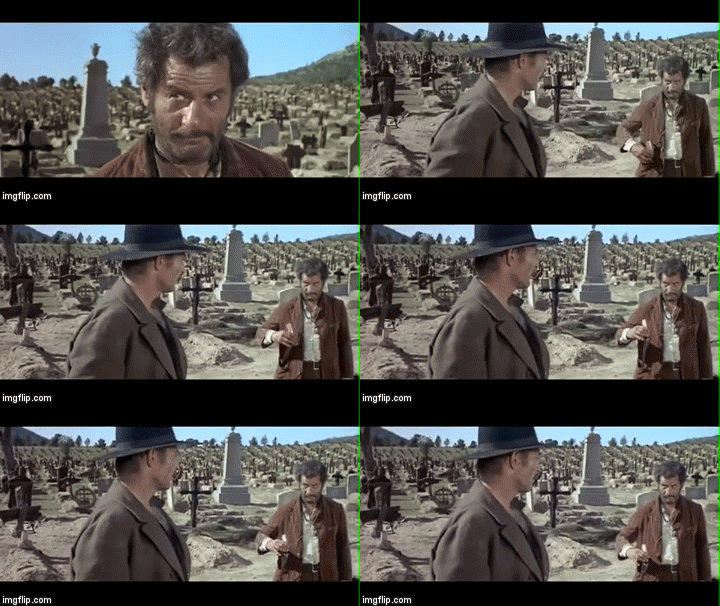
Storytelling can further be exhibited through the use of rhythm and almost cutting to the beat within the film. At (2:34) we see the camera cut to a mid shot of Lee Van Cleef on the beat of the music. Whilst the camera doesnt cut on every beat of the music it does cut in a more rhythmic sense, which does build to the big crescendo at the end. Cutting to the beat and cutting with a rhythmic sense, for storytelling, does create this relationship between the characters and genre of film. It not only creates the atmosphere and builds magnitude for the scene but it also carries this subtle humor through the scene that only a Western can do.
prov&with
cutting to beat
Combining shots into a sequence
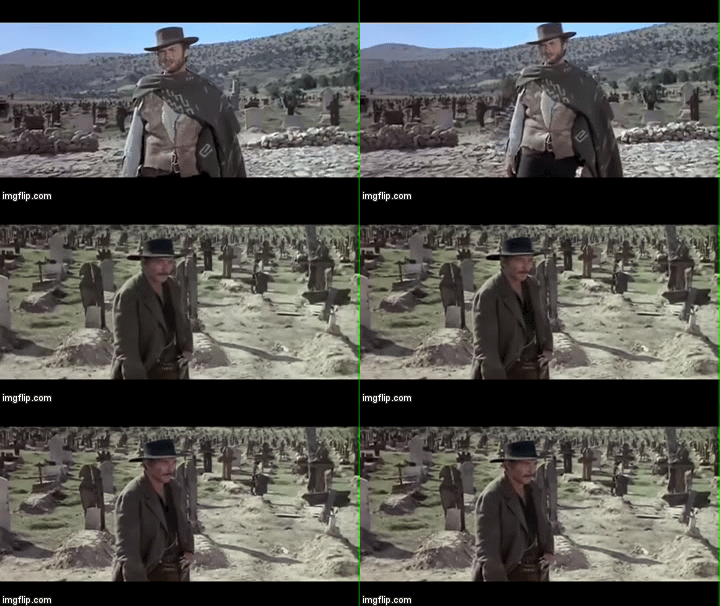
Through some editing techniques combining shots into a sequence is a way of adding a certain flow and style to the scenes. The development of the sequence will ultimately reveal events and engage the audience.We can see this purpose used through the continuity of the scene, which can be seen at (1:11) this is where the character asks why, but the camera does not dwell on him instead it cuts and almost snaps off him and on to Clint Eastwood. At (1:15) the camera has now cut to show Clint Eastwood, but his time in frame is much longer, the camera holds on for a couple of seconds before cutting to another shot. This ultimately puts the emphasis on the 'good guy' and snaps off the 'bad guy' to distinguish the intentions of both characters. Furthermore, by using this technique it twists the audience's judgment of both characters, whilst this is scene is much later in the film it still continues to manipulate our thoughts even though its late on.
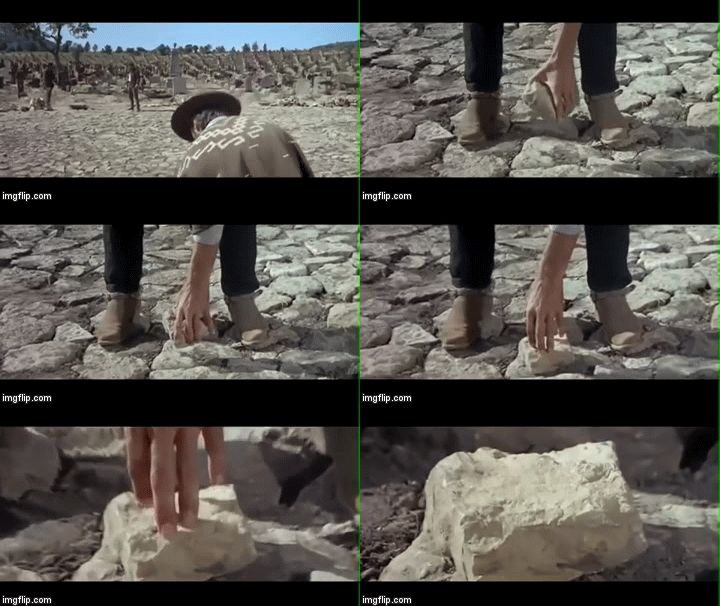
Another way of combining shots into a sequence is through the use of the match on action, which can be seen at (2:10.) Here we see an over the shoulder shot of the two characters as Clint Eastwood is putting the rock down, the camera then cuts to a close up of his hand putting the rock down, ending with the camera zooming into an extreme close up. This match on action technique adds a certain intensity to the scene, it emphasises the unknown and ultimately creates an ambiguity to the shot. Whats different about the match on action in this scene is the way in which the camera zooms. As it is rare for a camera to zoom, in this instance, it carries a more underlying satirical tone, to what is a very intense scene. For the audience it just takes the edge off and continues this unique western style which is serious but also is a little, 'tacky.'
Continuity
Match on Action
Creating Pace
Creating pace is a way of communicating an emotion more explicitly, it will enhance the audiences feelings through the scene.
One way that creating pace can be achieved is through the editing rhythm in certain parts of the scene. At (3:06) here we see the character pull out his gun very slowly staring at the other character as he puts it in his holster. He stands there for a long time and waits for the other character to walk away. This deliberate slow paced emphasis during this part of the scene allows the audience to feel the intensity rising. It almost marks the start of the building crescendo, the slow paced action allows the audience to really take in more detail and almost feel the stare out that the two characters are having.
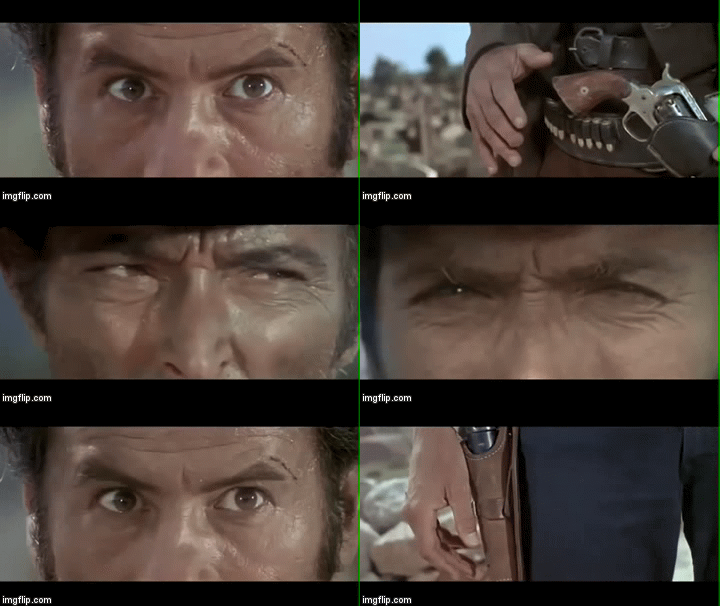
Another way in which pace is created is through a more montage style towards the end of the scene. At (6:37) we see a series of fast paced cuts, that constantly show the three characters faces and their hands that are moving closer towards their guns. The montage is the final stages of this huge rushing, crescendo at the end. The audience are feeling this huge mass of intensity, leaving them on edge as we wait for the someone to shoot. Whilst this montage only lasts a few seconds, from an audience perspective it feels like minutes and thus leaving them with this ever growing anxiety.
Editing Rhythm
Montage
One way that creating pace can be achieved is through the editing rhythm in certain parts of the scene. At (3:06) here we see the character pull out his gun very slowly staring at the other character as he puts it in his holster. He stands there for a long time and waits for the other character to walk away. This deliberate slow paced emphasis during this part of the scene allows the audience to feel the intensity rising. It almost marks the start of the building crescendo, the slow paced action allows the audience to really take in more detail and almost feel the stare out that the two characters are having.
Another way in which pace is created is through a more montage style towards the end of the scene. At (6:37) we see a series of fast paced cuts, that constantly show the three characters faces and their hands that are moving closer towards their guns. The montage is the final stages of this huge rushing, crescendo at the end. The audience are feeling this huge mass of intensity, leaving them on edge as we wait for the someone to shoot. Whilst this montage only lasts a few seconds, from an audience perspective it feels like minutes and thus leaving them with this ever growing anxiety.
Editing Rhythm
Montage

No comments:
Post a Comment